
Table of Contents
CIE Graph DB Mockup
Tap on your touch pad or mouse click on the graph to open up panel to expand and zoom around the graph.

Overview
This is a mockup of a graph of a partial view of CIE evolution done in a software tool “drawio” that shows relationships between some works, projects and organization groupings (CIE Inc. CIE, DTSL@Arter). Future views will show people and roles, links to supporting documentation and underlying artifacts.
This is work in progress towards build out of an underlying graphdb repository for CIE inclusive of:people, places, works, technology, dates, relationships, roles (composed by, performed by, member of, …).
While apparently more complex that columnar data (e.g. spreadsheets, relational databases), graph databases offer advantages in supporting semantic models of relationships.
Earlier work has been done for CIE using community edition of Neo4J.
This style of graphic for CIE dates back to the original concept plan for the Tudor exhibition that became Teasing Chaos which had a wall graphic of this style portraying the exhibition. Herve Percebois created a wall graphic that included Tudor, CIE, and Rainforest for MAC Lyon.
This work is viewed as foundational for navigation and management for the CIE Evolution given the hybrid between physical and virtual. Such graph’s are very useful in recognizing the CIE is not and has not been a hierarchical organization.
Graph databases is key underlying technology used for mapping social networks.
This form of graph has similarities to think maps also used for conceptualizing scope that has been used from time to time. Thinkmaps (like XMIND) tend to be more strongly hierarchical. The advantage of graph databases is defining more complex relationships and dimensions than thinkmaps with central theme.
As integrated in to a web application, a web page would be provided to allow zooming around and filtering with clickable links to supporting details and documentation.
Graph databases support structure and flexibility defining properties both at the node level and for the linkages.
This is also helpful for conceptualizing and considering completeness and alternative means of navigating web site and the collection.
Viewing Tips
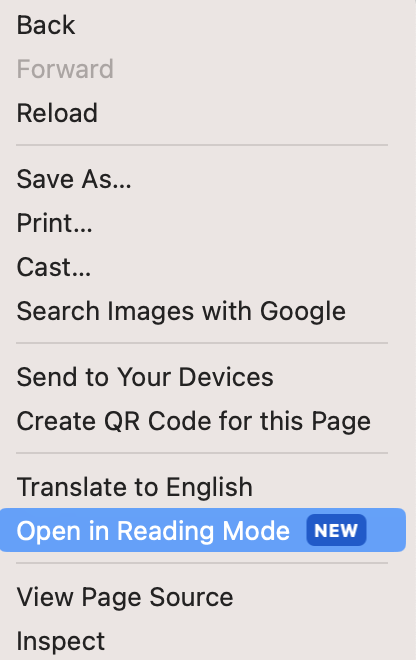
Google Chrome has a new feature “Reading Mode” that allows and easy method of expanding and zooming around the graph (try right click with 2 button mouse or hold ctrl key and touchpad)
Implementation Notes
This uses the drawio features to export as a URL and then embedded here as an html iframe.
Next Steps
Future work here will involve developing a maintainable graphdb for CIE and implementing a web based viewer that supports filters, views, zoom. In a more mature form, the User Interface application allows a viewer to select various aspects of the information held with in the graph to be used in various ways.